
A Geodesic Nightmare
Smash Your Prison
I'm making Cathexis, a game about smashing your way out of a living prison. Simple premise. Turns out delivering on it is complicated.

An Architectural Immune System
The prison in Cathexis, The Construct in the game's lore, is a colossal, rusting megastructure looming over an endless cloudscape. It has grown monstrous and cruel from eons of neglect and isolation, forgotten by the ancient gods that built it.

In its hunger for endless growth and domination, The Construct developed an immune system that:
- Attacks foreign invaders inside its innards with "antibodies"
- Heals walls that have been damaged or destroyed
- Morphs the architecture itself to evade destruction
To actually create that immune system, I found myself wondering how nature handles some of the immediate problems there:
- How do you locate the invader?
- How do you know which walls are damaged or destroyed?
- How would you change your shape and know what you're morphing into?
Turns out prisons and creatures both share these problems. That's why they both use the same word to describe the answer: Cells.
Triangular Cells
As I started to build Cathexis, I quickly learned that for The Construct to truly be alive, it had to be made of some kind of repeating unit. Some building block that could apply its algorithms all over this huge, world-sized structure.

It turns out that there are very few repeating units that apply universally, particularly things you could build a 3d level out of. Cubes end up in blocky voxel worlds, and while I love those as much as the next gamer, blocks tend to look solid and built, not organic.
So I was left with tiling 2d shapes that formed 3d levels: Meshes of cells forming chambers and tubes and planes and everything in between. Turns out there are only two tiling shapes: quads and triangles. And because a quad is simply two right triangles, that meant there was only one irreducible game in town: The Construct had to be made out of triangles.
The Simplex
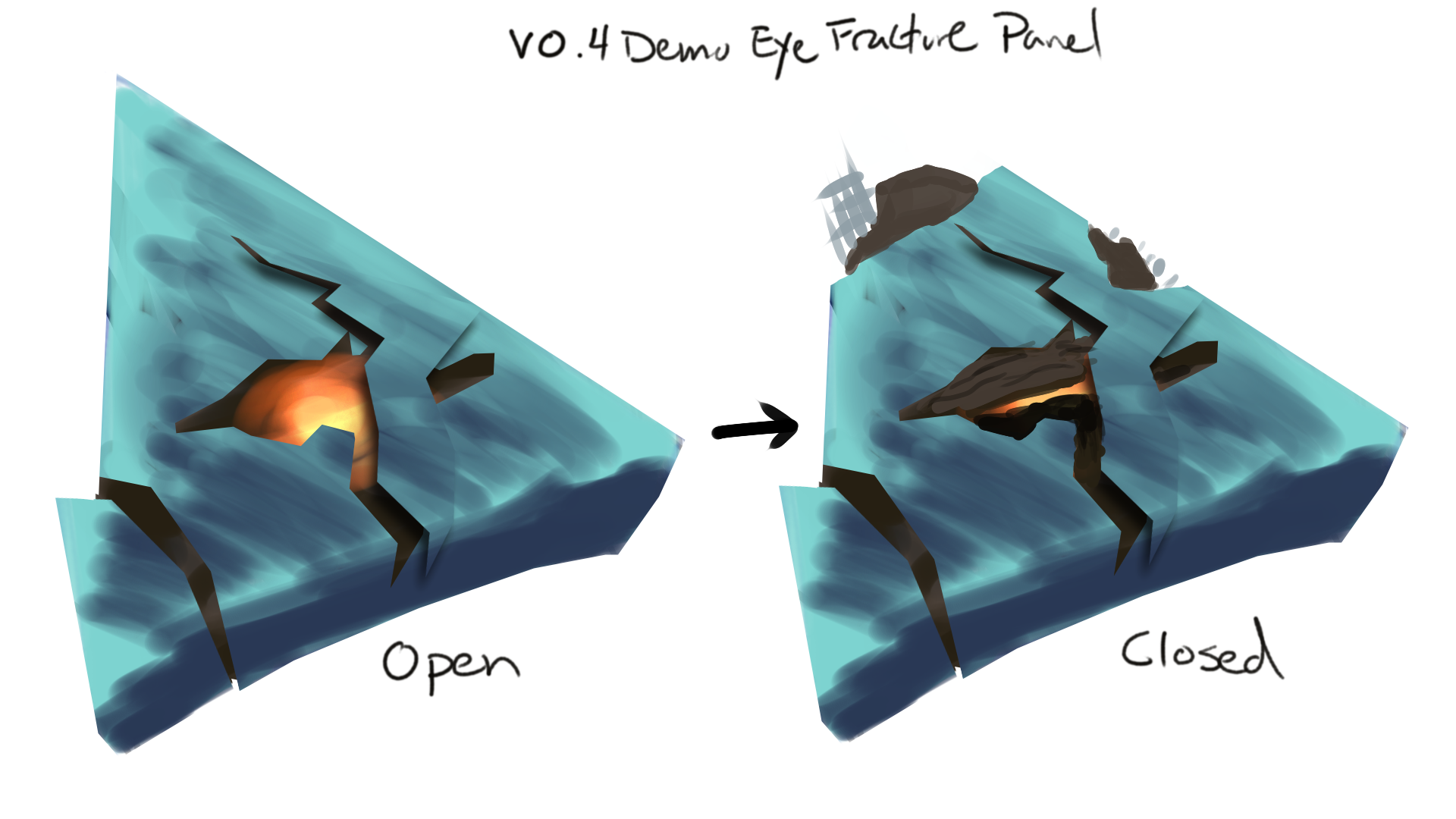
The Construct is a Complex. It is also complex in the adjective sense. But it's formed by tiling a 2d simplex into walls of tessellating triangular panels.
I'm not the first person to use triangles in architecture. Geodesic Domes like the famous Spaceship Earth at Disney World's Epcot Center take advantage of the unique rigidity of triangles to perfectly distribute the weight through equal, balanced edges, allowing for complex shapes like spheres to maintain their shape even under stress.
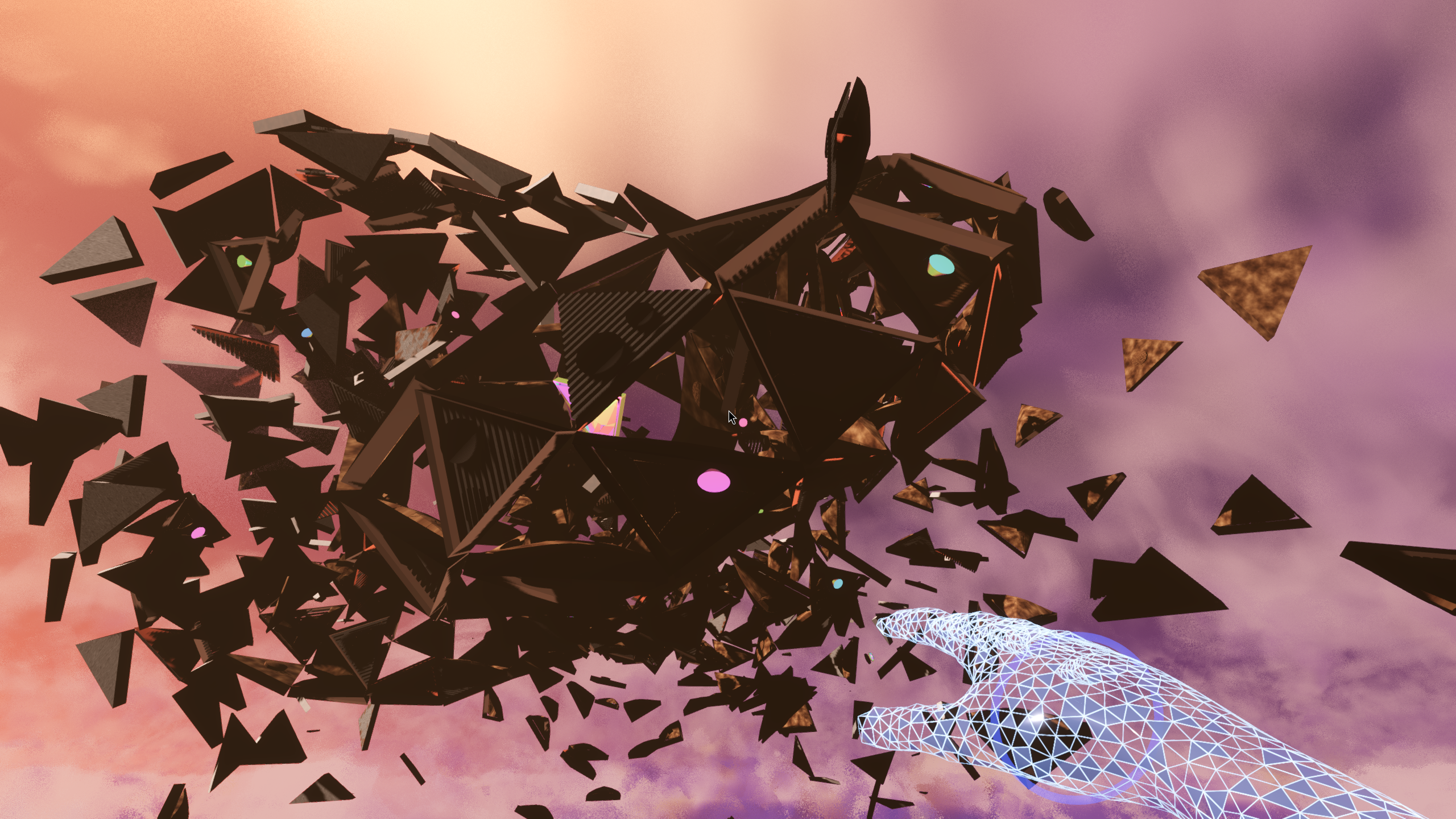
And that connection has turned out to be a lot of fun.
Form Follows Function
The best part about these triangular walls is that they can follow very weird curves, twists, and bends. The kinds of shapes you'd expect from a monstrous megastructure.
The more I learn about the geometry of this architecture, the more exciting it is to build a game around it. I can't wait to share more about all the possibilities for level design, environmental interaction, and puzzles this geometry unlocks!